Last Tour Home: When the Battlefield Follows You to the Ranch
- Category: Drama, Thriller, Mystery, Indie
- Release Date: February 3, 2026 (VOD / Digital)
- Cast: Michael Bricker, Baylee Toney, Matthew Blade, Cherish Rodriguez, Sadie LaPointe
- Language: English
- Duration: Feature Length (Approx. 95 mins)
- Director: Baylee Toney
- Distributor: Freestyle Digital Media
- Themes: PTSD, Redemption, Small-town Secrets, Grief
The “returning soldier” narrative is one of the oldest and most poignant tropes in American cinema, from The Best Years of Our Lives to The Deer Hunter. It asks a fundamental question: Can you ever truly come home when you’ve seen the horrors of war? On February 3, 2026, Freestyle Digital Media released a new, gritty addition to this canon: Last Tour Home.
Directed by the multi-talented Baylee Toney (who also stars in the film), this independent feature blends the slow-burn character study of a drama with the simmering tension of a rural thriller. While it lacks the explosive budget of a Hollywood blockbuster, it makes up for it with raw emotional authenticity and a sense of atmospheric dread. For the audience on fmovies.tr who appreciate “Rural Noir”—stories set in the quiet, dusty corners of America where secrets are buried deep—Last Tour Home is a compelling, if sometimes harrowing, watch. It reminds us that peace is not just a location; it is a state of mind that some men can never find.
The Plot: Sanctuary Under Siege
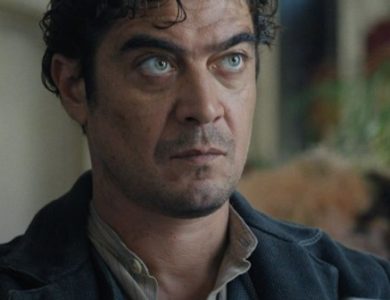
The story introduces us to Tyler (Michael Bricker), a war veteran carrying the invisible but heavy baggage of his service. Seeking to escape the noise of the world and perhaps outrun his own memories, Tyler takes a job as a ranch hand in a remote, nondescript rural town. He craves solitude and physical labor—the kind of work that exhausts the body so the mind doesn’t have time to wander.
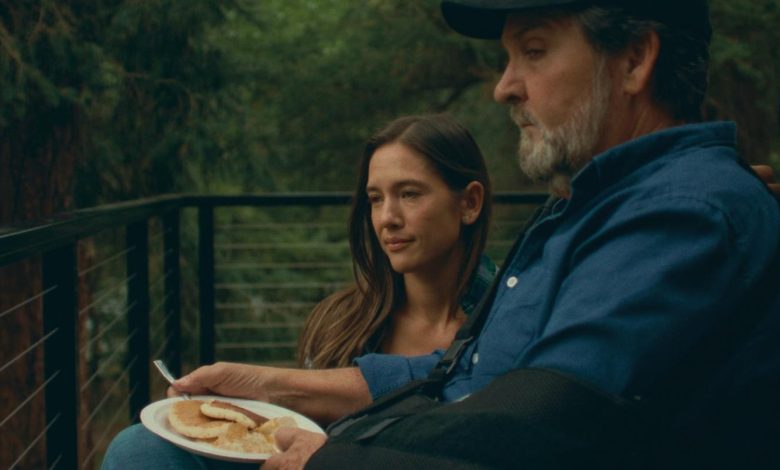
At first, the ranch seems to offer the sanctuary he desires. He forms a tentative, uneasy peace with the ranch’s owner, an older veteran who recognizes the thousand-yard stare in Tyler’s eyes. This intergenerational bond between two soldiers—one from a past war, one from a recent conflict—provides the film’s emotional anchor. Tyler also bonds with the owner’s granddaughter (Sadie LaPointe), finding a semblance of family life that he thought he had forfeited.
The Mystery Unravels
However, in small towns, there are no strangers, only new subjects of gossip. Tyler’s arrival disrupts the delicate ecosystem of the community. The tension spikes with the introduction of a grieving neighbor (Matthew Blade). This neighbor is a man consumed by the unsolved death of his sister, a tragedy that has left him paranoid and volatile.
As Tyler tries to keep his head down, the neighbor becomes convinced that the newcomer is not who he says he is. He begins to suspect that Tyler knows something about the sister’s death—or perhaps that Tyler’s past violence is bleeding into the present. What starts as suspicion escalates into a dangerous game of cat and mouse. Tyler finds himself fighting a war on two fronts: the PTSD flashbacks attacking his mind, and a real-world threat that demands he become the soldier he swore he left behind.
Director’s Vision: Baylee Toney’s Dual Role
Baylee Toney takes on the formidable task of directing and acting, a challenge that requires a singular clarity of vision. As a director, Toney opts for a grounded, realistic approach.
Visual Aesthetic: The film is shot with a focus on the vast, open spaces of the ranch. Toney uses the landscape to emphasize Tyler’s isolation. The cinematography captures the stark beauty of the countryside—dust motes dancing in the barn light, the endless horizon at sunset—but frames it in a way that feels lonely rather than liberating. The color palette is earthy and muted, reflecting the worn-down state of the characters.
Pacing and Tone: Last Tour Home is a slow burn. Toney is patient with her characters. She allows scenes to breathe, letting the silence between lines of dialogue speak louder than the words themselves. This pacing might challenge viewers accustomed to fast-paced action, but it is essential for building the psychological tension. The thriller elements are introduced gradually, creeping in like a storm cloud, until the drama transforms into a survival story.
The Cast: Portraits of Broken Men
In an independent film, the acting must carry the weight of the story, and the cast here delivers performances that feel lived-in and authentic.
- Michael Bricker as Tyler: Bricker delivers a stoic, internalized performance. Playing a character with PTSD is a delicate balancing act; go too big, and it feels like a caricature. Bricker avoids this, playing Tyler as a man holding himself together with duct tape and willpower. His physical acting—the way he holds his shoulders, the way he avoids eye contact—conveys a man who is constantly assessing threats. When the violence inevitably erupts, it feels tragic rather than triumphant.
- Matthew Blade as The Neighbor: Blade provides the antagonistic force, but he is not a mustache-twirling villain. He is a man broken by grief. His obsession with his sister’s death has curdled into paranoia. Blade manages to make the character sympathetic even as he becomes dangerous. We understand his pain, even as we fear his actions.
- Baylee Toney and Sadie LaPointe: Toney (likely playing a local connection or relative) and LaPointe provide the humanity that Tyler is trying to protect. They represent the “normal” life that is so close yet so far out of reach for him. Their interactions with Tyler soften his hard edges, raising the stakes—now he has something to lose.
Critical Review: A Study in Trauma and Suspense
Last Tour Home is a film that operates in the grey areas of morality. It doesn’t offer easy answers about justice or healing.
The Thriller Aspect
While marketed partly as a thriller, the film is more of a character study with suspense elements. The central mystery—what happened to the neighbor’s sister and what, if anything, Tyler knows—serves as a catalyst to force the characters into conflict. The script does a good job of misdirection, making the audience question Tyler’s reliability as a narrator. Is he really an innocent man looking for peace, or is his past darker than we know? This ambiguity keeps the viewer engaged.
Themes of Displacement
The title Last Tour Home suggests a finality that the main character cannot achieve. The film poignantly explores the idea that for some soldiers, the “tour” never ends. The ranch is supposed to be “home,” but the war follows him there. The film critiques the lack of support systems for veterans, showing how they are often left to drift into the margins of society, vulnerable to suspicion and violence.
Budget and Execution
As a Freestyle Digital Media release, viewers should expect an indie scale. There are no massive explosions or CGI set pieces. The film relies on practical locations and dialogue. Occasionally, the budget constraints show in the lighting or sound mixing of certain exterior scenes, but these are minor quibbles in an otherwise tightly constructed narrative. The rawness of the production actually enhances the gritty atmosphere of the story.
Last Tour Home is a somber, effective drama that transitions into a tense standoff. It is a film for those who like their stories grounded in the dirt and sweat of the real world.
Baylee Toney shows great promise as a director, crafting a film that is empathetic towards its damaged characters without excusing their flaws. Michael Bricker’s lead performance anchors the movie, providing a compelling look at a man trying to outrun his shadow. If you enjoy films like Out of the Furnace or Blue Ruin—movies about ordinary people pushed to the brink in rural America—this is a worthy addition to your VOD queue.